West Highland Dog with Retro Color Shirt
A Designer’s First Look: Charm, Clarity, and Craftsmanship
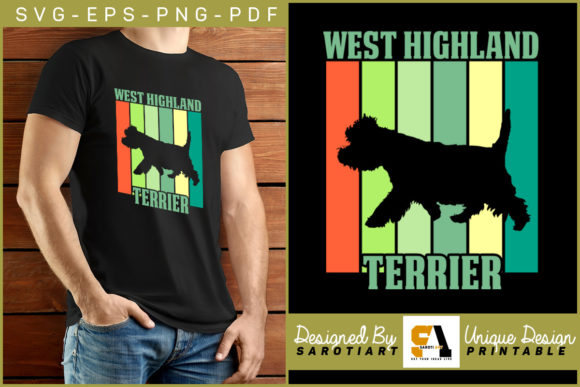
When I opened the West Highland Dog with Retro Color Shirt embroidery file, my first thought wasn’t “cute dog”—it was “this has personality *and* purpose.” As someone who’s stitched hundreds of designs for clients, Etsy shops, and boutique apparel lines, I immediately saw how this graphic bridges whimsy and wearability. The Westie sits front-and-center in a relaxed, confident pose—not stiff or overly stylized—wearing a bold, retro-inspired shirt that adds instant visual rhythm. It’s not just a silhouette; it’s a character with attitude, scaled smartly for impact without sacrificing legibility at common embroidery sizes (3.5”–4.5” wide).
Where This Design Truly Shines
I recently used the West Highland Dog with Retro Color Shirt on a set of organic cotton tote bags for a local pet-friendly café pop-up. It worked beautifully—not as filler, but as a signature element. Here’s where it consistently delivers:
- Custom apparel: Especially on crewneck sweatshirts and unisex tees—the retro palette pops against heather grey or navy, and the clean outlines hold up well under medium-weight knit stabilizers.
- Embroidered patch: I digitized a version for iron-on backing, and the satin stitch on the dog’s coat and shirt collar gave crisp definition without thread buildup.
- Baby embroidery: On a soft cotton onesie, I reduced the size to 2.75” and used lightweight tear-away stabilizer—no puckering, no detail loss. Parents loved the playful yet timeless vibe.
- Holiday embroidery & personalized gifts: Paired with a simple “Happy Howl-idays” running stitch banner, it became a standout gift for dog-loving grandparents. The retro color shirt makes it feel intentional—not generic clip art.
- Craft business & Etsy seller appeal: As a digital embroidery file, it’s versatile enough for printable mockups, layered product listings, and small-batch merchandise. Its “dog lover” heart is clear, but the retro styling keeps it from feeling dated or niche-only.
Real-World Considerations Before You Stitch
This isn’t a “set-and-forget” design—and that’s a good thing. Its charm comes with thoughtful execution. Here’s what I learned stitching it across six fabric types and three hoop sizes:
- Small hoop sizes (under 4”): Works cleanly down to ~3”, but avoid going smaller unless you’re willing to simplify the shirt’s pattern details manually. Tiny retro stripes can blur into fill stitch noise.
- Textured or stretchy fabric: On terry cloth towels and ribbed knit caps, I added cutaway + topping (like Sulky Solvy) to keep the shirt’s color blocks distinct. Without it, the retro stripes softened too much.
- Dark fabric: The design relies on contrast—especially between the white Westie and colored shirt. Test thread colors carefully: a warm charcoal grey works better than black for the dog’s outline on navy, preserving brightness.
- Curved surfaces (caps, baby beanies): The centered composition helps, but avoid placing the dog’s ears or shirt hem right along the seam line—they’ll distort. A slight upward tilt (2–3°) improves flow on curved crowns.
- Frequent-wash items (kitchen towels, baby blankets): Confirm stitch density isn’t excessive in the shirt area—dense fill stitches can stiffen fabric over time. A balanced mix of satin and fill works best here.
What It Adds to Your Finished Product—Beyond Aesthetics
The West Highland Dog with Retro Color Shirt elevates more than just the item—it lifts perception. Customers notice the intentionality: the retro palette signals care in curation, not just convenience. On an apron for a vet clinic’s holiday market stall, it sparked conversations—not just “Oh, a dog,” but “That shirt! Is that 70s mod?” That kind of engagement builds trust. For Etsy sellers, it reads as *handmade product*, not mass-printed graphic. For craft fair vendors, it supports brand consistency when paired with matching tea towels or pillow covers—even without logos, the visual language ties things together. And yes, it increases giftability: people buy it *because* it feels personal, not because it’s cheap to produce.
Practical Designer Notes—No Guesswork Allowed
Before you commit to a client order or bulk run, do these five things:
- Test on scrap fabric—same weight and weave as your final piece. Watch how the shirt’s color blocks behave under tension.
- Check thread color contrast in natural light *and* under store lighting. That mustard yellow shirt? It glows on cream linen but fades slightly on oatmeal fleece.
- Review stitch density in the dog’s ruff and shirt seams—overly dense areas can cause stiffness or thread breakage on home machines.
- Confirm hoop size compatibility. If you’re using a 4x4 hoop, verify the full design fits with ⅛” margin—some retro elements extend farther than expected.
- Verify licensing. Since this is listed under Graphics in the Crafts category, confirm whether commercial use (e.g., selling finished embroidered sweatshirts) is permitted before listing on Etsy or Shopify.
Final Thought: A Design That Earns Its Place
The West Highland Dog with Retro Color Shirt isn’t just another dog graphic—it’s a conversation starter with craft integrity. It performs reliably across embroidery projects when treated with attention to fabric, stabilizer, and scale. It suits handmade product makers who value both charm and clarity, and it gives small shop owners a distinctive asset that stands out in saturated markets. Use it thoughtfully, test intentionally, and let that retro shirt do what it does best: add warmth, wit, and quiet confidence to every finished product.