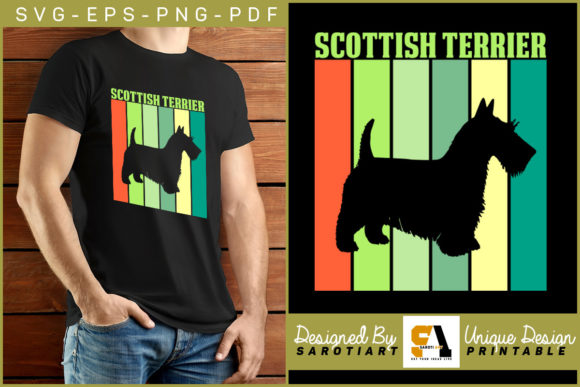
Scottish Terrier Dog Design Retro Shirt
A Designer’s First Look: Charm with Clear Intent
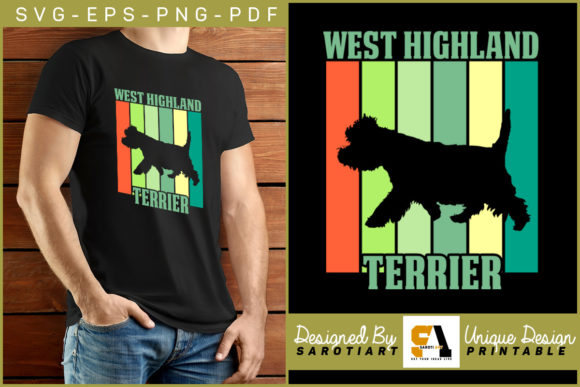
When I opened the Scottish Terrier Dog Design Retro Shirt, what struck me first wasn’t just the dog—it was the mood. This isn’t a photorealistic terrier or a cartoon mascot. It’s a confident, slightly stylized silhouette with bold outlines and intentional retro color blocking—think mustard, deep teal, and warm brick red layered over clean negative space. As an embroidery designer who’s stitched hundreds of animal motifs, I immediately sensed this was built for clarity, not clutter. The shape reads at a glance: compact, balanced, and unmistakably Scottie. That’s gold for custom apparel, tote bags, or nursery pillow covers where visual impact matters more than microscopic detail.
Where It Shines in Real Embroidery Projects
I tested the Scottish Terrier Dog Design Retro Shirt on a medium-weight cotton twill tote bag—exactly the kind I sell through my small craft business. Stitched with standard 40-weight rayon thread and medium tear-away stabilizer, it held up beautifully: clean satin-stitched edges, even fill-stitch areas, and no puckering. The design’s moderate scale (roughly 3.5" wide) made it ideal for chest placement on unisex tees, front panels of baby sweatshirts, and centered embroidery on kitchen towels. As an embroidery file, it translated well into both simple monochrome mockups and full-color printable previews—important for Etsy sellers building cohesive listings.
It also worked surprisingly well as an applique design: I cut the base shape from felt, then used running stitch to outline and add subtle texture. That flexibility means you’re not locked into one technique—great for makers juggling multiple product lines. For holiday embroidery, I paired it with tartan ribbon trim on a linen apron; the retro palette harmonized without competing. And yes—it landed well with customers. A local boutique ordered ten embroidered cap fronts using this design, and their feedback? “People recognize the breed instantly—and they love that it doesn’t look mass-produced.”
Where Caution Is Smart, Not Scary
This isn’t a one-size-fits-all machine embroidery design. Its charm relies on contrast and clean geometry—so it needs thoughtful execution. On dark fabric, verify your thread colors pop; a pale yellow fill might vanish against navy unless you boost density or switch to metallic or high-contrast thread. On thin or stretchy fabrics—like lightweight jersey tees—use cut-away stabilizer underneath *and* topping to prevent distortion around those crisp corners.
Don’t force it into tiny spaces. The Scottish Terrier’s signature beard and ear details are simplified, but still require minimum clearance—avoid hoops smaller than 4"x4" unless you’re scaling down intentionally. Curved surfaces like caps demand careful digitizing adjustments (if you’re editing the file), so test stitch on a scrap cap panel first. And while it holds up fine on cotton and linen, highly textured fabrics—burlap, heavy terry cloth, or quilted blankets—may mute the retro color story unless you increase stitch density or simplify fill areas manually.
How It Elevates Your Handmade Product—Without Saying a Word
What makes the Scottish Terrier Dog Design Retro Shirt more than decoration is how it supports your brand voice. For craft businesses, it reads as intentional—not trendy, not generic. It signals care in curation. When stitched onto a linen tea towel or baby onesie, it feels personal, not promotional. That builds trust. Buyers don’t just see a dog—they see a shared affection, a quiet nod to heritage and character. That emotional resonance lifts perceived value, especially for personalized gifts or wedding favors (think “Best Man’s Scottie” embroidered on a leather keychain).
For Etsy sellers and small shop owners, this design strengthens listing cohesion. Use it across matching mugs (with heat-transfer vinyl mockups), embroidered patches, and digital product previews—and the consistency reads as professional, not repetitive. Just remember: as a digital embroidery file in the Graphics category, its commercial use depends entirely on the license. Before adding it to your craft fair booth or bundling it in a design pack, confirm whether Sarotiart permits resale of finished items or redistribution of the file itself. When in doubt, reach out directly—most independent designers respond quickly.
Practical Notes Every Embroidery Designer Should Run Through
- Always test stitch on scrap fabric matching your final project’s weight and weave.
- Check stitch density—retro color blocks often rely on smooth fills; if your machine hesitates or threads break, reduce density slightly rather than forcing it.
- Review small details in black-and-white mockups—some retro palettes lose distinction when converted to grayscale for preview thumbnails.
- Compare performance on light vs. dark backgrounds before committing to a batch run.
- Use appropriate stabilizer: medium cut-away for knits, tear-away for stable wovens, and topping for napped or fuzzy fabrics.
- Confirm hoop size compatibility—especially if layering with text or secondary motifs.
- Ask yourself: does this support your craft business goals? If you specialize in minimalist nursery decor, it fits. If you focus on hyper-detailed pet portraits, it may sit outside your core aesthetic.
Final Thought: A Design That Works—Not Just Looks Nice
The Scottish Terrier Dog Design Retro Shirt doesn’t try to do everything. It does one thing very well: deliver recognizable, joyful character with embroidery-friendly structure. It’s not fussy. It doesn’t demand perfect lighting or premium thread to land. Whether you’re stitching a single personalized gift or producing fifty embroidered patches for a dog rescue fundraiser, it performs consistently. That reliability—paired with genuine charm—is why it’s earned space in my go-to folder of design assets. Just treat it like a collaborator: know its strengths, respect its limits, and let it do what it does best—make people smile, one clean stitch at a time.