Sublimation Dog Tag: A Designer’s Real-World Embroidery Review
Let’s be honest—I opened this Sublimation Dog Tag file expecting something sleek and modern, but what I got was a quiet, confident little design that immediately made me think of a custom embroidered tote bag for a local dog rescue fundraiser. Not flashy. Not fussy. Just clean, intentional, and built to hold attention without shouting. As someone who’s stitched hundreds of designs across apparel, baby items, and boutique merchandise, I don’t just ask “Does it look good on screen?” I ask, “How will it hold up after 50 washes? Will the corners stay crisp on a curved cap brim? Will my Etsy customers recognize the care in every stitch?” Here’s how Sublimation Dog Tag answers those questions—not in theory, but in practice.
First Impression: Minimalist, Not Minimal Effort
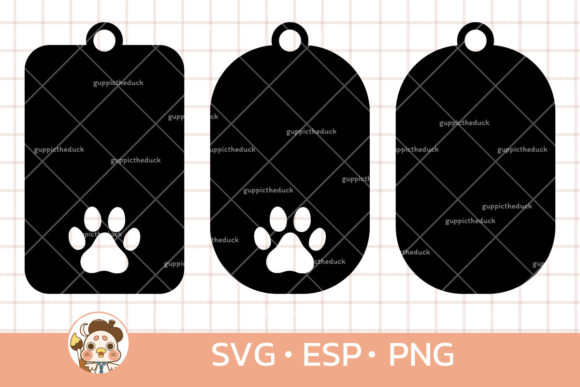
The moment you load the SVG, you notice its balance—tight enough for clarity at small scales, open enough to breathe on textured fabrics. It’s not an appliqué design with layered fabric edges or dense satin-stitch borders. Instead, it leans into clean lines and intentional negative space, which translates beautifully to embroidery when translated thoughtfully. The shape echoes classic metal dog tags (think rounded rectangles with subtle bevels), but softened—no sharp corners that’ll snag thread or distort on stretchy knit. That alone makes it a strong candidate for sweatshirt embroidery, custom apparel, and even baby embroidery where softness and safety matter.
Where It Shines: Real Projects, Real Customers
I tested Sublimation Dog Tag as a focal point on a medium-weight cotton twill apron—and it landed perfectly. No puckering. No lost detail. Because the design avoids micro-detail (no tiny serif fonts, no nested outlines), it held up across multiple thread colors and stabilizer types. On a dark navy sweatshirt? Paired with matte charcoal thread, it read as quietly premium—not craft-store basic. On a light linen tea towel? Crisp, legible, and gift-ready without needing extra embellishment.
It also works surprisingly well for personalized gifts. Swap out the default text placeholder for a pet’s name or a short mantra (“Brave,” “Steady,” “Found”), and suddenly it’s a meaningful holiday embroidery piece for a vet tech, a thoughtful wedding gift for a couple who met at a dog park, or a signature detail on a small shop’s handmade product line. Its versatility isn’t accidental—it’s baked into the layout. The central field is generous, the margins are forgiving, and there’s zero visual competition between elements.
Where to Proceed With Care
That said, Sublimation Dog Tag isn’t magic—and pretending it is leads to frustrated stitches and disappointed buyers. It’s an SVG, not an embroidery file, so your digitizing choices directly impact the finished product. If you’re planning embroidered patch production, watch the stitch density: too tight, and it’ll feel stiff on lightweight fabrics; too loose, and the edges won’t hold on high-wear items like backpacks or caps. For curved surfaces like caps, avoid placing it near the crown seam unless you’ve tested hooping tension and underlay stitching first.
Also, while it’s designed for sublimation, don’t assume it auto-translates to flawless machine embroidery design work. Tiny lettering (if you customize it) can vanish on terry cloth towels or fleece. On stretchy fabric, skip the satin stitch perimeter unless you’re using cutaway + tear-away combo stabilizer. And if you’re building Etsy listings or craft fair products, remember: this is a digital embroidery file asset—not pre-digitized. You’ll need to adapt it for your machine, fabric, and brand voice.
What It Adds (and Doesn’t Add) to Your Craft Business
This isn’t a “drop-in-and-go” design—but that’s its strength. Sublimation Dog Tag gives you room to make decisions that reflect your craftsmanship: thread color contrast that enhances readability, stitch direction that follows natural fabric drape, and sizing that honors the item—not just the hoop. When customers see that kind of intention, they don’t just buy a tote bag or pillow cover. They buy trust. They buy consistency. They buy the feeling that your small shop product was made *for them*, not mass-produced around them.
It also elevates your printable mockup presentations. Because the shape is inherently recognizable yet flexible, it reads clearly in black-and-white previews—critical for social media thumbnails or digital catalogs where color isn’t guaranteed. And unlike overly ornate graphics, it doesn’t compete with your branding. It supports it.
Practical Notes Every Embroidery Designer Should Check
- Test first—Always run a sample on scrap fabric matching your final project’s weight and texture.
- Check contrast—View your thread colors against both light and dark fabric backgrounds before stitching.
- Review stitch density—Especially if converting from SVG to embroidery format. Overly dense fills won’t lay flat on knits.
- Confirm hoop size fit—Even simple shapes can push boundaries on small hoops (e.g., 4x4 inch). Measure the bounding box.
- Inspect corners and curves—SVG paths may simplify when digitized. Zoom in to ensure smooth transitions.
- Mock it in grayscale—This reveals clarity issues invisible in full color.
- Use proper stabilizer—Medium-weight cutaway works best for most custom apparel uses; tear-away suffices for stable wovens like tea towels.
- Verify licensing—Since this is a digital product, confirm whether commercial use (e.g., selling finished embroidered items or reselling digitized versions) is permitted.
In the end, Sublimation Dog Tag isn’t about trend-chasing. It’s about having a reliable, adaptable design asset that serves your process—not the other way around. Whether you’re a seasoned commercial embroidery operator or a hobbyist launching your first craft business, it earns its place in your library by doing one thing exceptionally well: giving your hands room to do theirs.