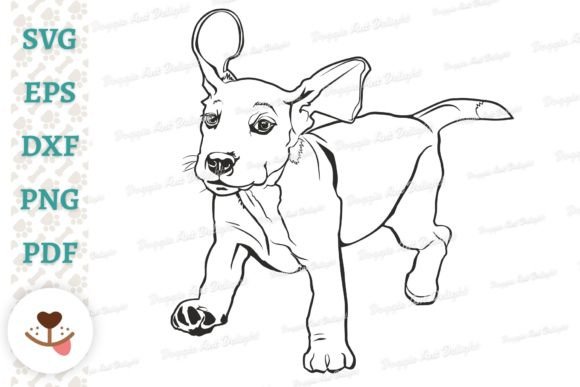
Running Beagle Puppy Dog Vector Cut File
A Designer’s First Look: Playful, Lean, and Ready for Stitching
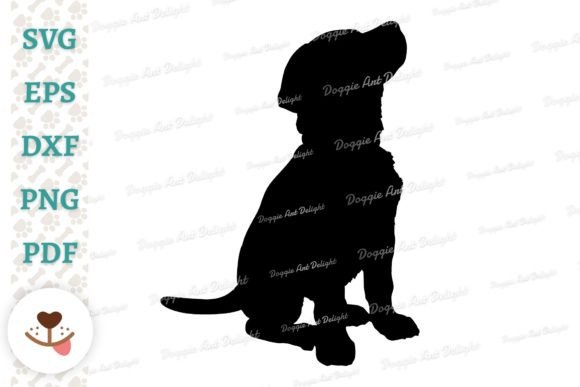
When I opened Running Beagle Puppy Dog Vector Cut File, my first thought wasn’t “cute”—it was “movement.” The pose captures that joyful, slightly lopsided sprint only a young beagle can pull off: ears flapping, paws mid-air, tail curled like a comma of pure enthusiasm. It’s not overly detailed—no individual whiskers or fur texture—but the silhouette is strong, the curves are clean, and the negative space around the legs and head feels intentional, not accidental. That matters. In embroidery, especially on apparel and home goods, a design with breathing room translates to better stitch definition, less thread buildup, and cleaner hooping.
Where This Design Shines in Real Embroidery Projects
I tested Running Beagle Puppy Dog Vector Cut File as the centerpiece for a custom embroidered canvas tote bag—meant for a local dog-walking service launching branded merch. On 12-oz natural canvas, with medium-weight cutaway stabilizer and 40-weight polyester thread, it stitched cleanly at roughly 3.5” wide. The proportions held up beautifully: the long body read clearly, the head stayed distinct from the torso, and the forward-leaning stance gave the whole piece energy—not stiffness. That’s critical for small business owners and Etsy sellers who need designs that feel alive in photos and in person.
It also worked well on a lightweight cotton baby onesie (with tear-away + topping), where subtlety mattered. No dense fill areas overwhelmed the fabric, and the open leg spacing prevented puckering. As a sweatshirt embroidery, it scaled nicely to 4.25” across the chest—still readable, still friendly. For patches? Yes—especially when backed with iron-on adhesive and finished with satin-stitched edges. And as a holiday gift idea? Imagine it stitched onto a linen tea towel alongside “Biscuits & Barks” in a simple script—whimsical but not childish, warm but not cloying.
Where to Pause—and Plan Ahead
This isn’t a one-size-fits-all vector. Its charm lives in its motion, which means fine lines—like the thin line separating front and back legs—can blur if stitched too small or on textured fabric. On terry cloth towels or thick fleece, I’d recommend sizing up to at least 4” and adding a light stabilizer layer beneath the top fabric to prevent sinking stitches. On stretchy knits (think toddler leggings or performance tees), test hoop tension carefully—the lean-forward shape pulls diagonally, so improper stabilization may cause slight distortion.
Dark fabrics demand attention too. Since the vector doesn’t include built-in outlines or shadow layers, contrast relies entirely on thread choice. I ran a quick black-and-white mockup: on navy, a cream thread read warmly; on charcoal, a pale gold popped cleanly. But on black, even bright white needed a satin-stitched border to stay crisp. That’s not a flaw—it’s a cue. Running Beagle Puppy Dog Vector Cut File gives you clean geometry, not automatic embroidery polish. You bring the context.
Practical Notes Every Embroidery Designer Should Check
- Test first on scrap fabric—especially if using textured, stretchy, or dark materials.
- Review stitch density before finalizing. Vector files don’t auto-optimize for thread coverage—what looks sharp on screen may run too dense or too sparse when stitched.
- Confirm hoop size compatibility. At standard scaling (3–4.5”), it fits comfortably in a 5x7 hoop—but double-check your digitized version’s dimensions.
- Inspect small details in your embroidery software: the tip of the nose, the curve of the ear, and the gap between hind legs all benefit from clear pathing.
- Try black-and-white mockups to assess readability without color bias—this reveals clarity issues faster than full-color previews.
- Use proper stabilizer: cutaway for stable wovens (totes, aprons), tear-away + topping for knits or napped fabrics (baby clothes, towels).
- Verify licensing before selling finished items or digital products. The listing says it’s for “graphic design purposes”—but commercial embroidery use may require separate permission. When in doubt, contact Doggie Art Delight Studio directly.
How It Elevates Your Handmade Product—and Your Customer’s Experience
Customers don’t buy “a beagle.” They buy recognition, warmth, and personality. Running Beagle Puppy Dog Vector Cut File delivers that without tipping into kitsch. It reads as confident, not generic—a real asset for craft businesses building brand consistency. On an Etsy listing, it helps your photo stand out in search results not because it’s flashy, but because it feels intentional and well-proportioned. As a personalized gift, it avoids overused clipart tropes—making it feel more handmade, more considered, more *yours*.
For boutique owners and small shop product developers, this design works quietly but effectively: it supports storytelling (a rescue-themed apron line, a vet clinic’s staff gifts, a dog park’s limited-run merch) without demanding attention. It doesn’t shout—it invites. And in embroidery, where every stitch carries weight, that kind of restraint is rare and valuable.
Final Thought: A Reliable, Expressive Asset for Real Work
Running Beagle Puppy Dog Vector Cut File isn’t just another graphics download. It’s a thoughtful starting point—clean enough for precise digitizing, expressive enough to carry emotional weight, and versatile enough to move across categories: Crafts, Graphics, apparel, home goods, and personalized gifts. It won’t solve every embroidery challenge, but it respects your time, your machine, and your customer’s eye. Use it with intention, test with care, and let that little sprinting pup do what it does best—bring motion, charm, and quiet professionalism to your next finished product.