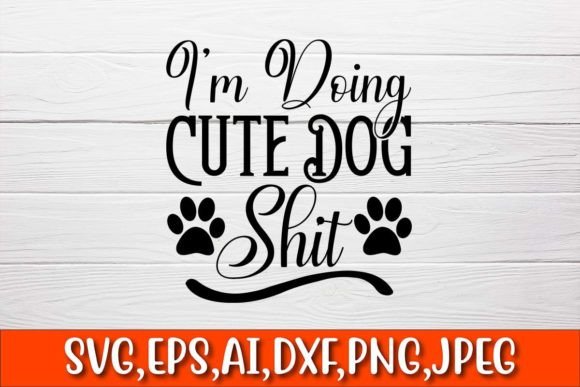
I’m Doing Cute Dog Shit
First Impressions: Playful, Punchy, and Perfectly on Brand
As someone who’s digitized, stitched, and sold hundreds of embroidery designs—especially for pet lovers and small-batch makers—I opened I’m Doing Cute Dog Shit expecting charm with a wink. What I got was exactly that: bold, lighthearted lettering with unmistakable dog-themed whimsy. The phrase sits cleanly in a single horizontal line, no extra graphics or clip art clutter. It’s not cutesy in a pastel-kitten way—it’s confident, slightly cheeky, and visually grounded. That matters when you’re planning real-world use: this isn’t a design you’d tuck into a corner or shrink down to 2 inches. It wants to be seen, smiled at, and worn proudly.
Real-Life Test Run: A Custom Embroidered Tote for a Local Dog Bakery
Last week, I prepped I’m Doing Cute Dog Shit for a client—a boutique dog treat shop launching reusable totes as holiday gifts. We chose a medium-weight canvas tote, black fabric, white thread, and a 4” x 4” hoop. The result? Instant personality. The lettering held its shape beautifully across the textured surface, and because the design is word-by-layer (as noted in the SVG file description), I could easily adjust stitch order for smoother satin coverage on curves. Customers loved it—not just as a joke, but as proof the brand doesn’t take itself too seriously. That authenticity translates directly to trust, especially for handmade product buyers browsing Etsy or local craft fairs.
Where This Design Shines—and Where It Needs Care
I’m Doing Cute Dog Shit works best when given breathing room and intention. It’s ideal for:
- Custom apparel: Sweatshirts, crewnecks, and denim jackets—especially with contrast thread (think mustard on navy or blush on charcoal).
- Tote bag design: Large, flat surfaces let the full phrase land without distortion.
- Embroidered patch: Digitize it onto twill or felt for sew-on or iron-on application—great for dog-walking groups or rescue org merch.
- Baby embroidery: Use soft pastel thread on organic cotton onesies—but only if your client appreciates dry humor (and knows their audience).
- Holiday embroidery: Pair with paw-print borders or bone motifs in a printable mockup for festive gift tags or tea towel sets.
That said, proceed thoughtfully with:
- Small hoop sizes: Below 3” wide, letter spacing tightens and legibility suffers—especially on stretchy fabric like ribbed knits.
- Textured or napped fabrics: Terry cloth, fleece, or bouclé can swallow fine details; increase stabilizer support and test stitch density.
- Dark fabric + light thread: Always check for haloing—white thread over black fabric sometimes needs an extra underlay or topping stabilizer.
- Curved surfaces: Caps or curved pillow covers require repositioning the phrase or splitting it—this design wasn’t built for wrap-around placement.
Design Integrity Meets Commercial Reality
What makes I’m Doing Cute Dog Shit more than just a fun phrase is how well it holds up as a machine embroidery design. There’s no excessive fill stitch clutter, no fragile serifs, and no tiny decorative elements that vanish after three washes. As a digital embroidery file, it’s lean—ideal for small shop owners who need clean, fast-stitching assets for quick turnaround orders. For Etsy sellers, it’s a strong candidate for “personalized gift” listings: pair it with a monogrammed dog tag or custom name, and you’ve got a cohesive, market-ready bundle.
But here’s what I watch closely: stitch density. Because the letters are thick and rounded—not thin script—the fill areas are generous. On lightweight fabrics like poplin or baby jersey, that density demands proper cutaway or tear-away stabilizer. Skip it, and you’ll get puckering that undermines the whole handmade product feel. Likewise, thread colors matter more than usual—this phrase reads *attitude*, so mismatched tones (e.g., neon green on beige) can unintentionally read chaotic instead of clever.
Practical Designer Notes Before You Stitch
- Test on scrap fabric first—especially if using textured, dark, or stretchy materials.
- Check thread color contrast in natural light and on camera; what looks crisp on screen may blur on fabric.
- Review stitch density in your embroidery software—if it exceeds 12,000 stitches, consider simplifying or adjusting underlay.
- Confirm hoop size compatibility; this design assumes standard 4”–5” hoops unless modified.
- Inspect small details manually—look for stray running stitch tails or unconnected letter joins.
- Test in black-and-white mockups to assess readability before committing to thread.
- Compare light and dark fabric backgrounds—some letterforms gain or lose impact depending on contrast.
- Use proper stabilizer—cutaway for knits, tear-away for stable wovens, topping for napped surfaces.
- Verify licensing before selling finished items or bundling the digital embroidery file—this is a Graphics download, not a commercial-use license by default.
Final Thought: Personality With Purpose
I’m Doing Cute Dog Shit isn’t filler. It’s a statement piece disguised as casual charm—exactly the kind of embroidery file that builds connection with customers who value wit, warmth, and well-executed craft. Whether you’re stitching it onto a boutique apron for a dog-friendly café or packaging it as part of a holiday embroidery kit for fellow makers, it brings energy without sacrificing clarity. Just remember: great embroidery starts with smart prep—not just pretty files. Treat I’m Doing Cute Dog Shit like the intentional design asset it is, and it’ll deliver far beyond the hoop.